
 Esperanto
 Shqiptare
 Euskara
 Zulu
Zulu
 Latinus
 Cymraeg
 தமிழ்
தமிழ்
 Slovak
 Slovak
 Afrikaans
News Hotspot
Contact Info
Hotline: +86-18831168296
E-mail: Info@cnwiremachine.com
Add: Gaoqian West Street, Sijiazhuang Town, Luquan District, Shijiazhuang City, Hebei Province
High-Precision and Efficient Wire Production — Advanced Wire Drawing Machines
Release Time:
Nov 03,2025
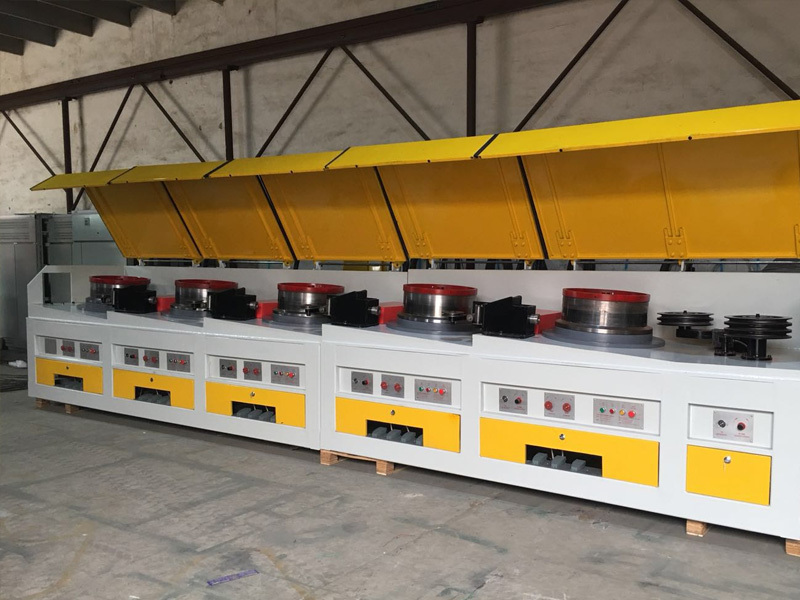
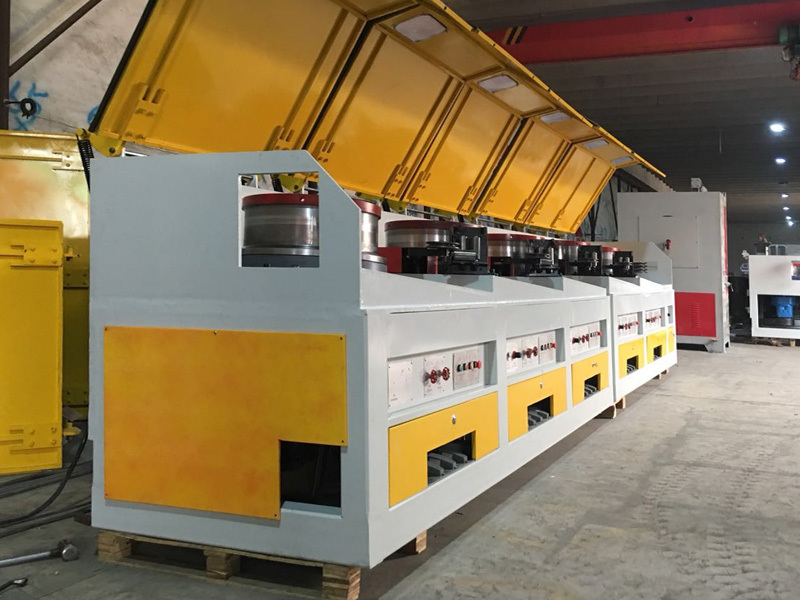
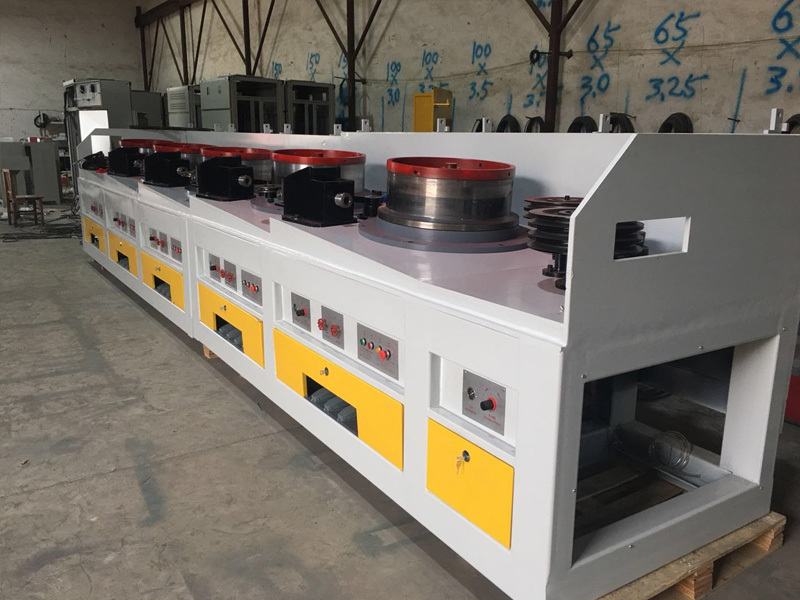
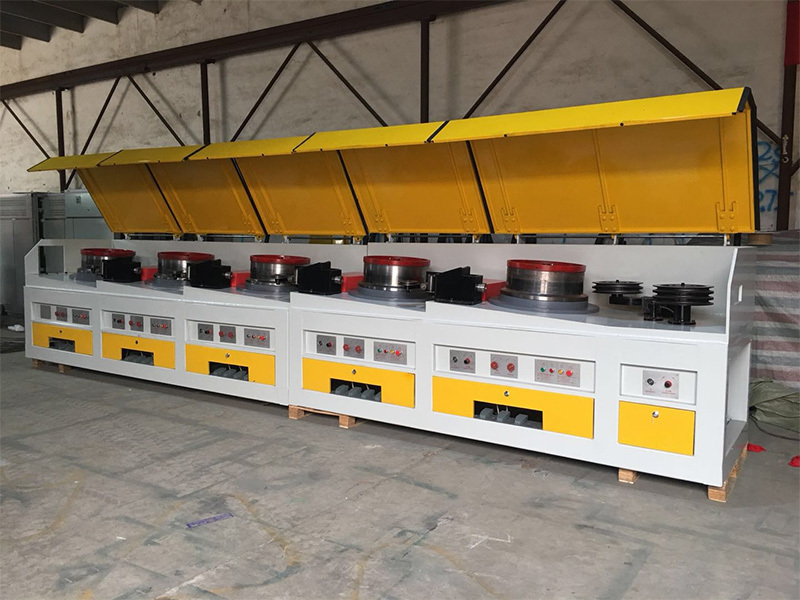
Wire drawing machines are a cornerstone in modern manufacturing, playing a crucial role in producing high-quality wires for industries ranging from electronics and telecommunications to automotive and construction.
Wire drawing machines are a cornerstone in modern manufacturing, playing a crucial role in producing high-quality wires for industries ranging from electronics and telecommunications to automotive and construction. With the increasing demand for precision, consistency, and efficiency in wire production, advanced wire drawing machines have become indispensable tools for manufacturers seeking to stay competitive. These machines are engineered to handle a wide variety of wire materials, including copper, aluminum, steel, and specialty alloys, ensuring that each finished wire meets strict industry standards in diameter, surface finish, and mechanical properties.
The core functionality of a wire drawing machine involves pulling metal wire through a series of dies to reduce its diameter while improving surface quality and mechanical strength. Modern machines employ precise control systems, often integrated with servo motors or CNC technology, to ensure uniform tension, speed, and alignment throughout the process. This precision reduces defects such as wire breakage, surface scratches, and dimensional inconsistencies, ultimately saving materials and reducing waste. Automated lubrication and cooling systems further enhance the quality of the finished wire by maintaining optimal drawing conditions, reducing friction, and prolonging the life of dies and machinery components.
Wire drawing machines offer several significant advantages for manufacturers. Firstly, they increase production efficiency by enabling high-speed operation with minimal downtime. Advanced machines allow operators to switch between wire diameters and materials quickly, supporting both small-batch and large-scale production without sacrificing quality. Secondly, they ensure consistent wire quality, which is critical for applications where precise electrical conductivity, mechanical strength, and surface finish are required. Thirdly, modern machines are designed with operator safety and ergonomics in mind, featuring intuitive interfaces, emergency stop systems, and protective enclosures to minimize the risk of accidents while reducing operator fatigue.
The applications of wire drawing machines span numerous industries. In the electronics sector, they produce ultra-fine copper wires used in circuits, transformers, and connectors, where precision and reliability are essential. The telecommunications industry relies on them to manufacture cables and optical fiber components that must meet stringent quality standards for signal transmission. Automotive manufacturers use wire drawing machines to produce wiring harnesses, brake lines, and structural components that demand uniformity and durability. Construction and infrastructure projects benefit from high-strength steel wires and cables, ensuring safety and performance in demanding environments.
Case studies highlight the transformative impact of advanced wire drawing machines on production efficiency and quality. A mid-sized copper wire manufacturer integrated a CNC-controlled wire drawing machine into their production line and reported a 35% increase in output while significantly reducing material waste. Another example from the automotive industry demonstrated that implementing a servo motor-driven wire drawing machine improved the consistency of wire diameters for wiring harnesses, reducing defect rates and lowering production costs. In telecommunications, companies producing ultra-fine wires for high-speed data transmission have achieved superior surface finishes and enhanced conductivity using advanced wire drawing systems, resulting in higher customer satisfaction and reliability.
Wire drawing machines also address common pain points in industrial wire production. Manual or semi-automatic drawing processes are prone to errors, inconsistencies, and higher labor costs. Outdated machinery often leads to frequent downtime, increased maintenance, and subpar wire quality. By adopting modern wire drawing machines, manufacturers can automate processes, improve precision, reduce human error, and optimize operational efficiency. Maintenance is simplified due to modular designs, long-life dies, and real-time monitoring systems, ensuring a long service life and reliable operation.
In addition to efficiency and precision, energy-saving designs and environmentally friendly features are increasingly incorporated into modern wire drawing machines. Optimized motor systems, reduced friction components, and automated lubrication help lower energy consumption and minimize environmental impact. Companies benefit from reduced operational costs while promoting sustainable manufacturing practices.
Overall, wire drawing machines are essential for any industry requiring high-quality wire production. Their combination of precision, speed, versatility, and reliability empowers manufacturers to meet market demands, reduce waste, and deliver superior products. From small-scale workshops to large industrial operations, these machines provide a competitive advantage, transforming wire manufacturing into a streamlined, efficient, and high-precision process. By integrating advanced technologies, robust mechanical designs, and user-friendly features, wire drawing machines remain a cornerstone of modern manufacturing, enabling industries to thrive in an increasingly demanding global market.
Key words:


☎️Phone
* Please Enter Keywords
The company specializes in the development and manufacture of a complete set of welding wire production lines and a complete set of metal wire drawing machines 📮 info@cnwiremachine.com