
language
English
العربية
বাংলাদেশ
Български
Hrvatski
Česky
Dansk
Nederland
 Esperanto
Slovenski
Filipino
Suomi
Français
Maori
 Shqiptare
Georgian
 Euskara
Deutsch
Ελλάδα
ישראל
इंडिया
Magyarország
Ísland
Indonesia
Irlanda
Italia
日本語
Sovensko
Հայաստան
한국
Kyrgyz
ປະເທດລາວ
 Zulu
Zulu
Latvian
Lithuanian
Luxembourgish
 Latinus
Macedonian
Малайская
Maltese
Монгол улс
 Cymraeg
ဗမာ
 தமிழ்
தமிழ்
नेपाल
Norge
ایران
Polska
Portugal
România
Российская
Србија
 Slovak
Србија
 Slovak
Bosanski
Slovenian
Беларус
España
Sverige
Точик
ประเทศไทย
Türk
Azərbaycan
Uzbek
 Afrikaans
Việt Nam
News Hotspot
Contact Info
Hotline: +86-18831168296
E-mail: Info@cnwiremachine.com
Add: Gaoqian West Street, Sijiazhuang Town, Luquan District, Shijiazhuang City, Hebei Province
What Is a Wire Drawing Machine? Working Principle, Types & Applications
Release Time:
Apr 30,2026
Wire drawing machines are the core equipment used in metal wire processing, widely adopted in steel wire, welding wire, galvanized wire, copper wire, and metal mesh production.
What Is a Wire Drawing Machine? A Complete Guide to Wire Drawing Technology
Wire drawing machines are the core equipment used in metal wire processing, widely adopted in steel wire, welding wire, galvanized wire, copper wire, and metal mesh production. For metal fabrication factories, understanding wire drawing machine working principles and common types helps improve production efficiency, reduce equipment failure rates, and select the most suitable processing solution.
This article explains what a wire drawing machine is, how it works, its main classifications, and typical industrial applications, providing practical knowledge for factory owners, mechanical purchasers, and production engineers.
1. Basic Definition of a Wire Drawing Machine
A wire drawing machine is a metal cold-working device that reduces the diameter of metal rods or wires by pulling the raw material through precision drawing dies. Through continuous extrusion and stretching, the metal wire obtains a smaller diameter, smoother surface, and higher tensile strength.
Unlike hot rolling or forging, wire drawing is completed at room temperature. The whole process effectively improves the metal’s density and surface finish, making it the most essential process in modern metal wire manufacturing.
2. Wire Drawing Machine Working Principle
The working principle of wire drawing machines follows a simple but precise mechanical logic. Raw materials, usually black bright wire rods or metal coils, pass through a series of drawing dies with gradually reduced apertures. Each die reduces the wire diameter by a fixed ratio, achieving gradual and uniform thinning.
During operation, the traction motor provides stable pulling force, while lubrication systems reduce friction between the wire and dies. This avoids surface scratches, wire breakage, and die wear. After multi-pass drawing, the final wire meets the required diameter, roundness, and surface quality.
Modern industrial wire drawing machines adopt PLC intelligent control, ensuring consistent tension, stable speed, and extremely low wire breakage rates during long-hour production.
3. Common Types of Wire Drawing Machines
According to structural design and processing methods, industrial wire drawing equipment is mainly divided into the following categories, each suitable for different materials and production scenarios:

Straight-Line Wire Drawing Machine
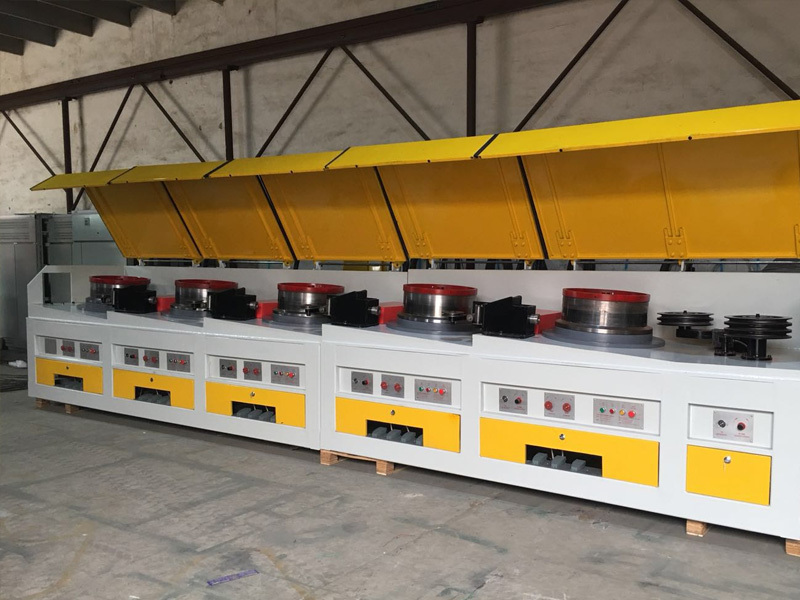
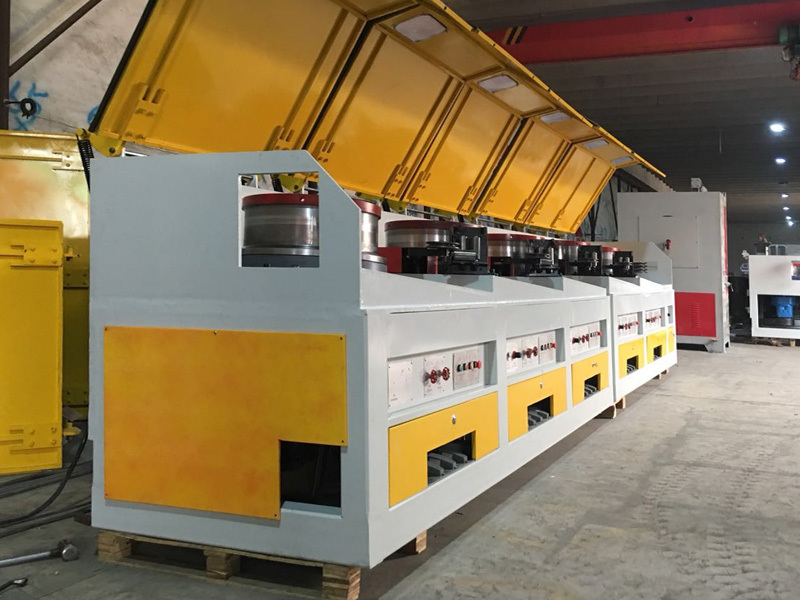
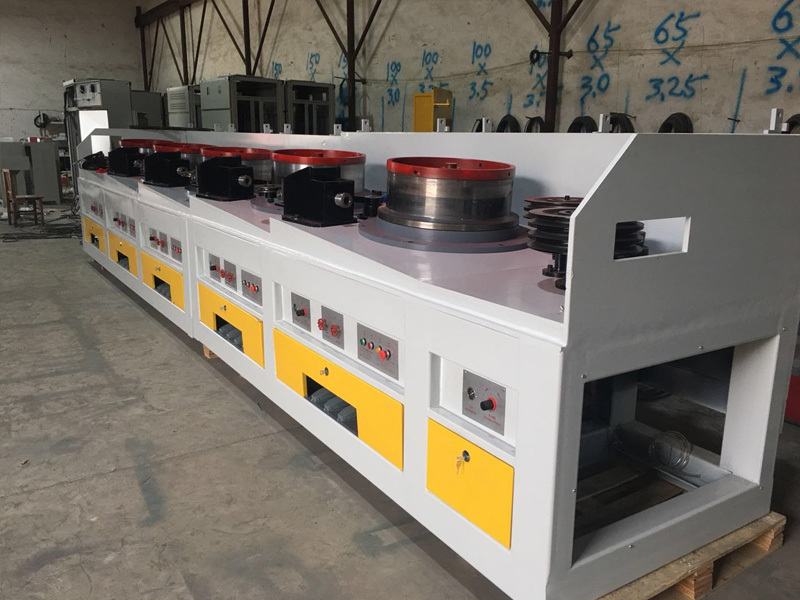
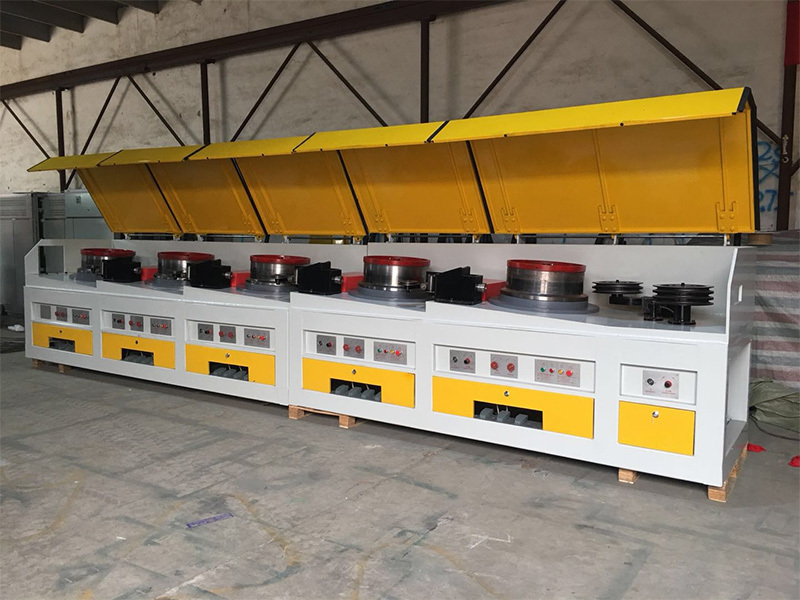
Straight-line drawing machines are mainstream equipment for high-speed and high-precision wire production. With no sliding friction between the wire and reels, they feature low wear, stable tension, and uniform wire diameter. They are widely used for welding wire, high-carbon steel wire, and precision industrial wire manufacturing.

Water Tank Wire Drawing Machine
Water tank drawing machines complete drawing inside a lubricating water tank. The whole process offers excellent cooling and lubrication effects, making them ideal for producing ultra-fine wires and soft metal wires such as copper wires and fine galvanized wires.
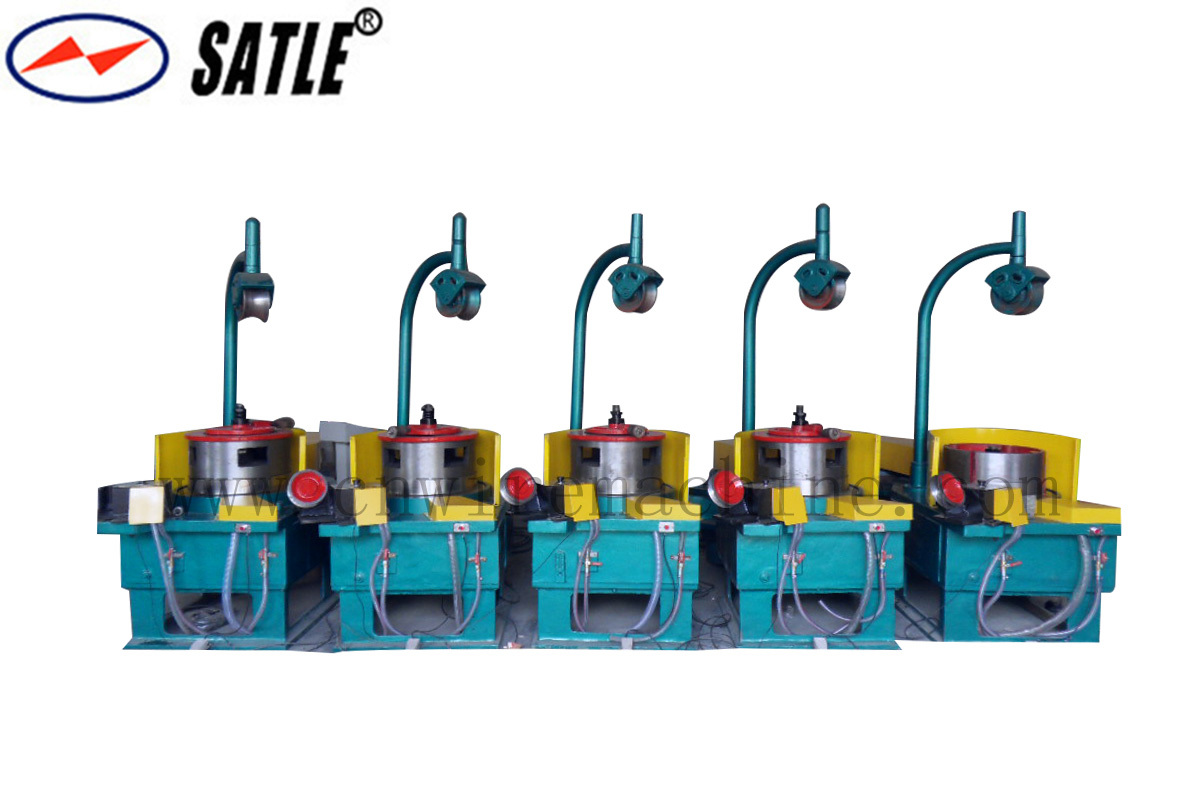
Pulley Type Wire Drawing Machine
Pulley drawing machines are cost-effective and highly adaptable. They are commonly used for low-carbon steel wire, iron wire, mesh wire, and general hardware wire production. With simple structure and low maintenance cost, they are the preferred choice for medium and small processing factories.

Steel Bar Wire Drawing Machine
This type is specially designed for thick steel bar and construction wire processing. It features strong traction force, large processing range, and high output, widely applied in construction steel wire and reinforcement wire production.
4. Main Industrial Applications
Wire drawing machines serve almost all metal wire-related industries. Typical application fields include:
Welding material industry: Production of solid welding wire and flux-cored wire
Construction and hardware: Steel wire, binding wire, nail wire
Wire mesh manufacturing: Galvanized wire, black iron wire, filter mesh wire
Cable and electrical industry: High-precision copper and aluminum wire
Automotive and industrial accessories: Spring steel wire, tire bead wire
5. How to Choose a Suitable Wire Drawing Machine
Selecting the right wire drawing machine depends on your wire material, finished wire diameter, and daily output requirements. For high-precision and high-standard products, straight-line drawing machines deliver better stability and surface quality. For conventional iron wire and mesh wire production, pulley-type machines provide higher cost performance. For fine wire processing, water tank machines remain the best solution.
Final Words
Wire drawing technology is the foundation of metal wire manufacturing. A clear understanding of SATLE wire drawing machine types, working principles, and application scenarios helps enterprises improve product quality, reduce production costs, and enhance market competitiveness. With the continuous upgrading of intelligent and energy-saving equipment, modern wire drawing machines are becoming more efficient, stable, and environmentally friendly for global metal processing industries.
Key words:


☎️Phone
* Please Enter Keywords
The company specializes in the development and manufacture of a complete set of welding wire production lines and a complete set of metal wire drawing machines 📮 info@cnwiremachine.com