
 Esperanto
 Shqiptare
 Euskara
 Zulu
 Latinus
 Cymraeg
 தமிழ்
 Slovak
 Slovak
 Afrikaans
News Hotspot
Contact Info
Hotline: +86-18831168296
E-mail: Info@cnwiremachine.com
Add: Gaoqian West Street, Sijiazhuang Town, Luquan District, Shijiazhuang City, Hebei Province
Straight Line or Inverted Wire Drawing Machine: Which One Do You Need?
Release Time:
Sep 23,2026
The key difference is not simply the physical arrangement of the equipment. It is the type of drawing process each machine is intended to perform. A straight line wire drawing machine is mainly used when the wire needs to go through multiple drawing dies to gradually reduce its diameter. The machine can combine several drawing passes in one production line, making it suitable for applications where a relatively smaller finished wire diameter is required from the starting material.
Straight Line or Inverted Wire Drawing Machine: Which One Do You Need?
Choosing a wire drawing machine is not simply a matter of comparing machine models or motor power. For wire manufacturers, one of the most important factors is whether the machine matches the incoming wire diameter and the number of drawing passes required by the production process.
This is where straight line and inverted wire drawing machines differ most clearly.
For typical steel wire production, a straight line wire drawing machine is designed for inlet wire diameters from approximately 3.5 to 12 mm and can be configured for up to 12 drawing passes. An inverted wire drawing machine is generally used for larger inlet diameters from approximately 12 to 25 mm, with one drawing pass being common and up to two passes available depending on the production process.
Understanding this difference makes machine selection much easier.

What Is the Main Difference Between Straight Line and Inverted Wire Drawing Machines?
The key difference is not simply the physical arrangement of the equipment. It is the type of drawing process each machine is intended to perform.
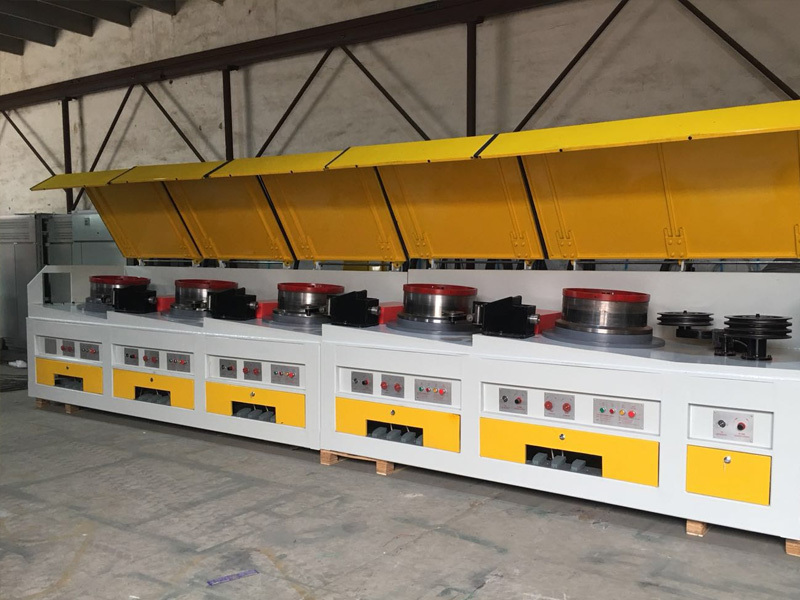
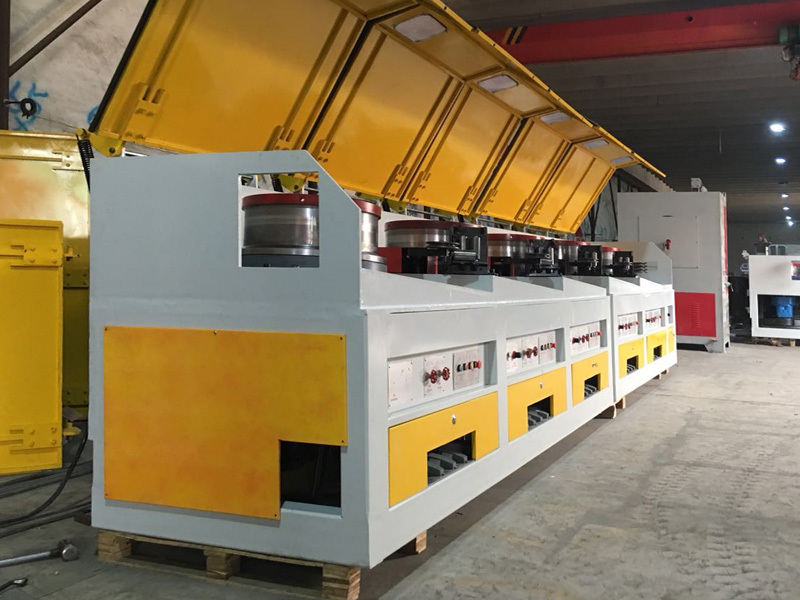
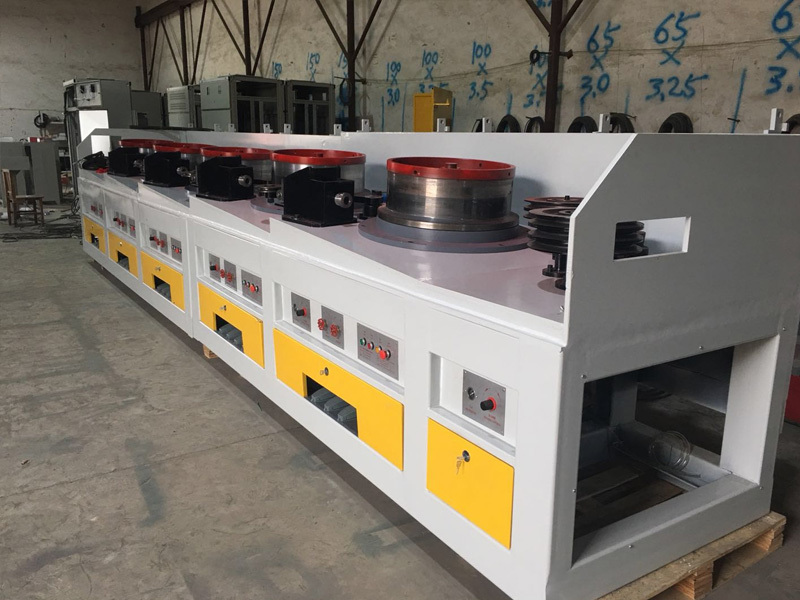
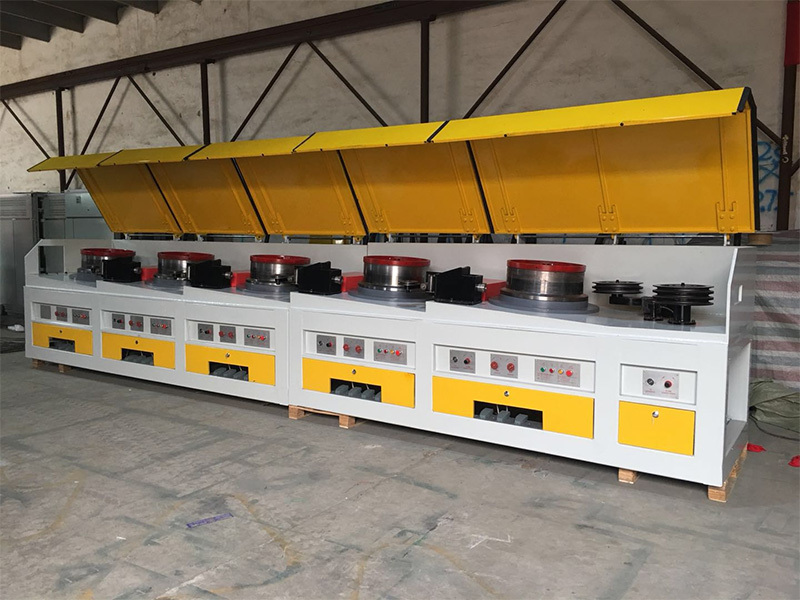
A straight line wire drawing machine is mainly used when the wire needs to go through multiple drawing dies to gradually reduce its diameter. The machine can combine several drawing passes in one production line, making it suitable for applications where a relatively smaller finished wire diameter is required from the starting material.
An inverted wire drawing machine, on the other hand, is commonly used for larger-diameter wire rod. Instead of carrying out many consecutive reductions, the process usually involves one drawing pass, or two passes when required.
In simple terms:
- 3.5–12 mm inlet wire + multiple drawing passes → Straight Line Wire Drawing Machine
- 12–25 mm inlet wire + one or two drawing passes → Inverted Wire Drawing Machine
This is the first point manufacturers should consider when choosing between the two machine types.
Straight Line Wire Drawing Machine: 3.5–12 mm Inlet Wire
Straight line wire drawing machines are suitable for inlet wire diameters in the range of approximately 3.5–12 mm.
The main feature of this type of machine is its ability to perform multiple drawing passes. Depending on the machine configuration, the drawing process can include up to 12 passes, allowing the original wire diameter to be reduced progressively toward the required finished size.
Instead of trying to achieve the entire diameter reduction in a single operation, the material passes through a series of drawing dies. Each pass performs part of the reduction, allowing the production process to gradually reach the required wire diameter.
This multi-pass approach is particularly useful when a manufacturer needs a significant reduction from the original wire diameter.
A straight line wire drawing machine can therefore be a suitable choice when a manufacturer needs:
- Multiple drawing passes in one continuous production process
- Progressive reduction of wire diameter
- Stable production of smaller-diameter steel wire
- A production configuration with several drawing blocks
- A drawing process requiring several consecutive reductions
It is important to note that 12 passes represents the maximum configuration, rather than a requirement for every production process. The actual number of passes depends on the inlet diameter, finished diameter, wire material and required reduction.
Inverted Wire Drawing Machine: 12–25 mm Inlet Wire
Inverted wire drawing machines are generally intended for larger inlet wire diameters, approximately 12–25 mm.
Compared with a straight line machine, the drawing process normally involves far fewer passes. One drawing pass is the common configuration, while some applications may require up to two passes.
This makes the inverted wire drawing machine suitable for production where larger-diameter wire rod needs to be reduced to the required size without going through a long series of drawing stages.
For manufacturers working with larger wire diameters, this type of machine provides a practical solution for heavy wire drawing applications.
An inverted wire drawing machine may be considered when:
- The incoming wire diameter is approximately 12–25 mm
- The production process normally requires one drawing pass
- Two drawing passes are sufficient for the required reduction
- The application involves larger-diameter steel wire
- A multi-pass straight line drawing process is unnecessary
The important point is that an inverted wire drawing machine is not simply another version of a straight line machine. The two types are designed around different drawing requirements.
Straight Line vs. Inverted Wire Drawing Machine
| Feature | Straight Line Wire Drawing Machine | Inverted Wire Drawing Machine |
|---|---|---|
| Inlet wire diameter | Approx. 3.5–12 mm | Approx. 12–25 mm |
| Maximum drawing passes | Up to 12 passes | Up to 2 passes |
| Common drawing process | Multiple passes | Usually 1 pass |
| Main application | Progressive diameter reduction | Large-diameter wire reduction |
| Production characteristic | Multi-pass continuous drawing | Single-pass or low-pass drawing |
| Typical starting wire | Smaller diameter range | Larger diameter range |
Why Does the Number of Drawing Passes Matter?
The number of drawing passes determines how the diameter reduction is distributed throughout the production process.
Trying to achieve a large reduction in one pass is not the same as dividing the reduction among several drawing stages. Each drawing die is responsible for a specific part of the reduction, and the complete drawing schedule needs to match the characteristics of the wire and the desired finished product.
This is why a manufacturer producing smaller-diameter wire may need a multi-pass straight line wire drawing machine, while a manufacturer processing larger wire rod may only need one or two passes with an inverted wire drawing machine.
The basic production logic can be illustrated as:
Starting diameter → Drawing Pass 1 → Drawing Pass 2 → Drawing Pass 3 → … → Final Diameter
When many reductions are required, a machine capable of multiple drawing passes becomes important.
When the required reduction can be completed in one or two stages, an inverted configuration may be more appropriate.
How Many Drawing Passes Do You Need?
The required number of drawing passes is determined by the relationship between the inlet diameter and the target finished diameter.
For example, if the starting wire diameter needs to be reduced substantially before reaching the final product size, the reduction can be distributed across multiple drawing passes. This is one of the main reasons why straight line machines can be configured with a larger number of drawing blocks.
By comparison, when the required reduction can be completed in a single operation, or with only one additional drawing stage, an inverted wire drawing machine may be sufficient.
Therefore, manufacturers should not select a machine based only on the maximum inlet diameter. The complete drawing requirement should be considered.
How Do You Know Which Wire Drawing Machine You Need?
Before requesting a quotation, manufacturers should prepare several basic production parameters.
1. Inlet Wire Diameter
Start with the diameter of the wire rod entering the machine.
- 3.5–12 mm: consider a straight line wire drawing machine.
- 12–25 mm: consider an inverted wire drawing machine.
The exact machine configuration should then be confirmed according to the complete drawing process.
2. Finished Wire Diameter
The final product diameter is equally important. A large difference between the inlet and finished diameter may require several drawing stages.
For this reason, simply providing the inlet diameter is usually not enough to determine the most suitable machine configuration.
3. Required Number of Drawing Passes
Determine whether the production requires:
- One drawing pass
- Two drawing passes
- Several consecutive drawing passes
- A multi-pass drawing process with a larger number of stages
This information can quickly narrow down the appropriate machine type.
4. Wire Material
Carbon steel, stainless steel, spring steel and other metal wires can have different drawing requirements. Material characteristics should therefore be considered together with diameter and reduction requirements.
5. Production Capacity
The required output also affects machine configuration, drawing speed, die arrangement and the downstream take-up system.
A machine that works well for one production target may not be the best choice for another factory with different output requirements.
Can One Machine Replace the Other?
Not necessarily.
Although both machines perform wire drawing, they are designed around different production conditions.
A straight line wire drawing machine is intended for multi-pass drawing within the 3.5–12 mm inlet range, while an inverted wire drawing machine is generally used for 12–25 mm inlet wire with one or two drawing passes.
Therefore, replacing one machine with the other simply because both are wire drawing machines may result in an unsuitable production configuration.
The better approach is to start with the actual drawing requirements:
- What is the starting wire diameter?
- What is the target finished diameter?
- How many drawing passes are required?
Once these questions are answered, the choice between straight line and inverted drawing equipment becomes much clearer.
Which Wire Drawing Machine Is Right for Your Production?
There is no universal answer to whether a straight line or inverted wire drawing machine is better. The appropriate choice depends on the production process.
If your incoming wire is within the 3.5–12 mm range and requires multiple drawing stages, a straight line wire drawing machine is generally the more appropriate solution.
If your incoming wire is within the 12–25 mm range and the required reduction can normally be completed in one or two passes, an inverted wire drawing machine is a better match for the process.
The machine should ultimately be selected according to the complete combination of:
Inlet Diameter + Finished Diameter + Wire Material + Drawing Passes + Production Capacity
SATLE Wire Drawing Machine Solutions
SATLE Machinery manufactures wire drawing equipment for different wire diameters and production requirements, including straight line wire drawing machines and inverted wire drawing machines.
For manufacturers planning a new wire production line or upgrading existing equipment, the machine configuration can be evaluated according to the actual drawing process rather than using a one-size-fits-all approach.
If you are unsure which type of wire drawing machine is suitable for your production, provide the following information:
- Inlet wire diameter
- Finished wire diameter
- Wire material
- Required production capacity
- Expected number of drawing passes
Based on these parameters, SATLE can recommend a suitable wire drawing machine configuration for your production requirements.
Key words:


☎️Phone
* Please Enter Keywords
The company specializes in the development and manufacture of a complete set of welding wire production lines and a complete set of metal wire drawing machines 📮 info@cnwiremachine.com