
 Esperanto
 Shqiptare
 Euskara
 Zulu
Zulu
 Latinus
 Cymraeg
 தமிழ்
தமிழ்
 Slovak
 Slovak
 Afrikaans
News Hotspot
Contact Info
Hotline: +86-18831168296
E-mail: Info@cnwiremachine.com
Add: Gaoqian West Street, Sijiazhuang Town, Luquan District, Shijiazhuang City, Hebei Province
Enhance the Quality of Your Metal Wire with Water Tank Drawing Machines
Release Time:
Oct 15,2023
Table of Contents: 1. Introduction 2. How Water Tank Drawing Machines Improve Wire Quality 3. Key Components of Water Tank Drawing Machines 4. Optimizing Water Tank Drawing Machines for Maximum Performance 5. Advantages of Using Water Tank Drawing Machines for Different Wire Types and Sizes 6. Best Practices for Enhancing Wire Quality with Water Tank Drawing Machines 7. Frequently Asked Questions
1. Introduction
2. How Water Tank Drawing Machines Improve Wire Quality
3. Key Components of Water Tank Drawing Machines
4. Optimizing Water Tank Drawing Machines for Maximum Performance
5. Advantages of Using Water Tank Drawing Machines for Different Wire Types and Sizes
6. Best Practices for Enhancing Wire Quality with Water Tank Drawing Machines
7. Frequently Asked Questions (FAQs)
8. Conclusion
1. Introduction
Water tank drawing machines have emerged as a game-changer in the production of high-quality metal wire. Through advanced technology and innovative engineering, these machines offer numerous benefits that can significantly enhance wire quality, increase production efficiency, and reduce costs. This article delves into the various aspects of water tank drawing machines, providing valuable insights into their functionalities and advantages.
2. How Water Tank Drawing Machines Improve Wire Quality
Water tank drawing machines play a crucial role in enhancing the quality of metal wire. By subjecting the wire to controlled tension and temperature during the drawing process, these machines effectively minimize surface defects and improve overall wire uniformity. The continuous cooling provided by the water tank ensures consistent wire properties, resulting in improved strength, ductility, and surface finish.
2.1 Minimizing Surface Defects
One of the primary advantages of water tank drawing machines is their ability to minimize surface defects on the wire. The controlled cooling process in the water tank helps prevent surface cracks, scratches, and other imperfections that can compromise the wire's quality. This ensures a smooth and flawless surface finish, making the wire suitable for various applications.
2.2 Enhancing Wire Uniformity
Water tank drawing machines contribute to improved wire uniformity by reducing variations in diameter, shape, and internal structure. The precise control of tension and temperature during the drawing process ensures consistent deformation and uniform grain structure. This ultimately leads to enhanced mechanical properties and better wire performance.
3. Key Components of Water Tank Drawing Machines
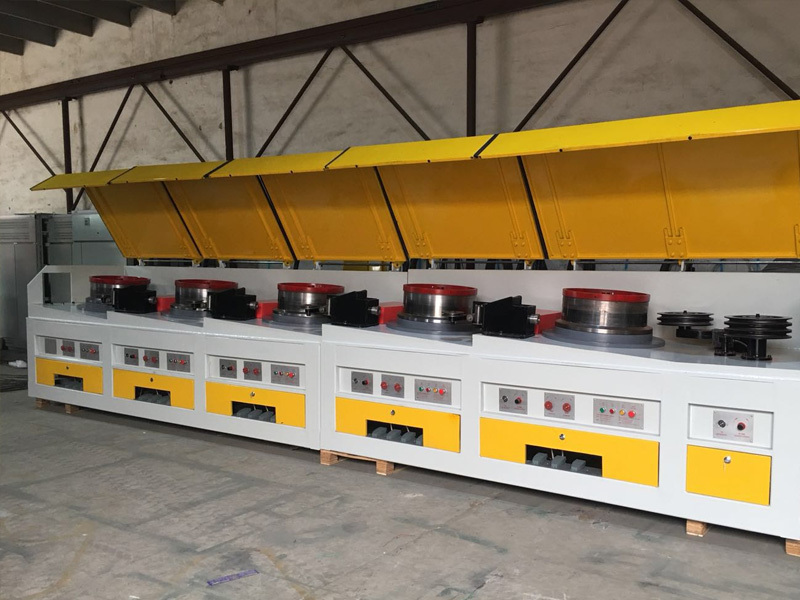
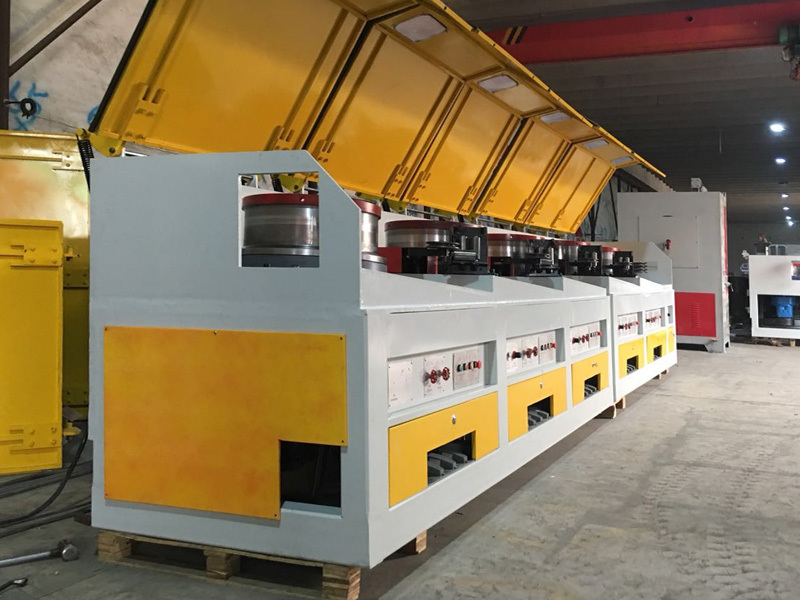
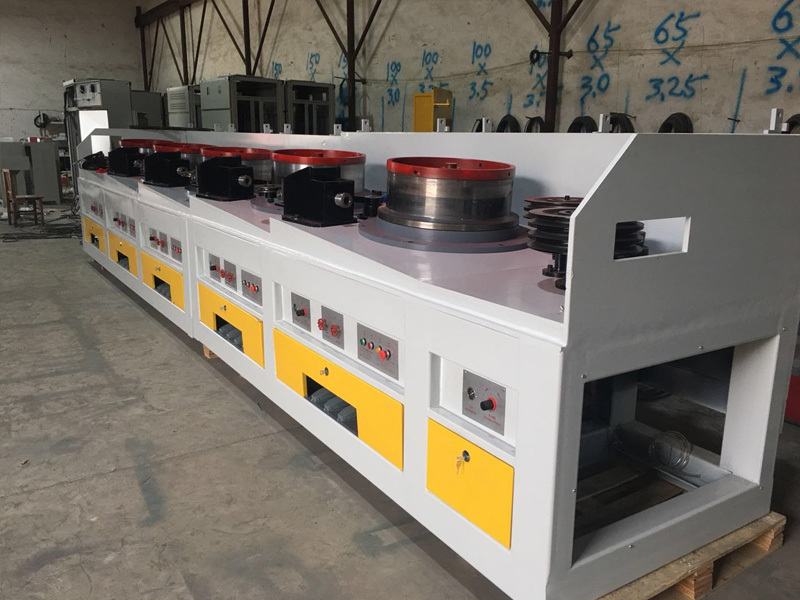
Water tank drawing machines consist of several key components that work together to ensure efficient wire drawing and quality enhancement. These components include:
3.1 Wire Drawing Die
The wire drawing die is a critical component that determines the wire's final diameter and surface finish. It is designed to reduce wire cross-section while maintaining the desired wire properties. The choice of die material and its geometric configuration significantly impacts the drawing process and wire quality.
3.2 Water Cooling System
The water cooling system plays a vital role in maintaining the desired temperature of the wire during drawing. It consists of a water tank, pumps, and a cooling mechanism that ensures continuous cooling and precise temperature control. Proper cooling is essential for minimizing wire defects and ensuring uniformity.
3.3 Capstan and Drawing Drum
The capstan and drawing drum are responsible for providing the necessary pulling force to draw the wire through the die. They ensure consistent tension and speed control, allowing for precise wire elongation and deformation. The design and surface finish of these components are critical for achieving optimal wire quality.
4. Optimizing Water Tank Drawing Machines for Maximum Performance
To maximize the performance of water tank drawing machines, certain factors should be considered:
4.1 Wire Lubrication
Proper wire lubrication is crucial to minimize friction during the drawing process. This reduces wear on the wire, die, and other components, resulting in improved wire quality and extended machine life. Choosing the right lubricant and applying it in the correct quantity is essential for optimal performance.
4.2 Drawing Speed and Tension Control
Precise control of drawing speed and tension is vital for achieving the desired wire properties. Overdrawing or underdrawing can lead to wire defects and inconsistencies. By optimizing the drawing speed and tension control, manufacturers can ensure uniform wire deformation and improved quality.
4.3 Die Maintenance and Replacement
Regular die maintenance and timely replacement are critical for maintaining optimal wire quality. Worn-out or damaged dies can result in wire defects and reduced performance. By inspecting and replacing dies as needed, manufacturers can prevent production issues and ensure consistent wire quality.
5. Advantages of Using Water Tank Drawing Machines for Different Wire Types and Sizes
Water tank drawing machines offer numerous advantages for various types and sizes of metal wire. Some key advantages include:
5.1 Enhanced Mechanical Properties
Water tank drawing machines improve the mechanical properties of metal wire, making it stronger, more ductile, and resistant to deformation. This is particularly advantageous for wires used in critical applications where high strength and reliability are essential.
5.2 Improved Surface Finish
The precise control and cooling provided by water tank drawing machines result in a superior surface finish. This makes the wire suitable for applications where aesthetics and smoothness are important, such as jewelry, automotive components, and architectural structures.
5.3 Increased Production Efficiency
Water tank drawing machines enable higher production efficiency due to their ability to draw wire at faster speeds without compromising quality. This leads to increased output and reduced production time, ultimately improving overall manufacturing productivity.
6. Best Practices for Enhancing Wire Quality with Water Tank Drawing Machines
To optimize wire quality with water tank drawing machines, manufacturers should follow these best practices:
6.1 Implementing Quality Control Measures
Establishing robust quality control measures throughout the wire drawing process ensures consistent and reliable wire quality. Regular inspections, testing, and adherence to industry standards help identify and address any deviations or defects promptly.
6.2 Continuous Training and Skill Development
Investing in employee training and skill development is crucial for maintaining optimal machine operation and wire quality. Well-trained operators can effectively monitor and adjust machine parameters, leading to improved wire properties and reduced production issues.
6.3 Regular Machine Maintenance
Routine machine maintenance is essential for preventing unexpected breakdowns and ensuring consistent performance. Regular cleaning, lubrication, and inspection of machine components help identify and address any potential issues that could affect wire quality.
6.4 Striving for Continuous Improvement
Consistently seeking ways to enhance wire quality is a key aspect of utilizing water tank drawing machines. Manufacturers should embrace a culture of continuous improvement, exploring new technologies and methodologies to optimize wire production and meet evolving customer requirements.
7. Frequently Asked Questions (FAQs)
Question 1: Can water tank drawing machines be used for different types of metal wire?
Answer: Yes, water tank drawing machines are designed to handle various types of metal wire, including steel, copper, aluminum, and more. The machines can be adjusted to accommodate different wire sizes and properties, offering versatility in wire production.
Question 2: How do water tank drawing machines contribute to cost reduction?
Answer: Water tank drawing machines improve wire quality and reduce the occurrence of defects, minimizing the need for rework or scrap. Additionally, the increased production efficiency and faster drawing speeds offered by these machines result in higher output within the same timeframe, reducing overall production costs.
Question 3: Are water tank drawing machines suitable for small-scale wire production?
Answer: Yes, water tank drawing machines can be utilized for both small-scale and large-scale wire production. They offer scalability and flexibility to meet the specific needs of different manufacturers, ensuring improved wire quality regardless of production volume.
Question 4: How can I ensure optimal performance from my water tank drawing machine?
Answer: To ensure optimal performance, it is important to follow the manufacturer's guidelines for machine operation, maintenance, and lubrication. Regular monitoring of machine parameters, such as drawing speed, tension, and cooling, is also essential for maintaining consistent wire quality.
Question 5: Can water tank drawing machines be integrated into existing wire production lines?
Answer: Yes, water tank drawing machines can be integrated into existing wire production lines with proper planning and customization. Experienced manufacturers can assess the compatibility of the machines with existing equipment and provide necessary modifications for seamless integration.
8. Conclusion
Water tank drawing machines offer a range of benefits for enhancing the quality of metal wire. Through precise control of tension, temperature, and cooling, these machines minimize surface defects, improve wire uniformity, and enhance mechanical properties. By optimizing the key components and following best practices, manufacturers can maximize the performance of water tank drawing machines and achieve superior wire quality. Embracing these technologies and best practices not only enhances production efficiency but also ensures the delivery of high-quality wire that meets the demands of various industries.
Key words:


☎️Phone
* Please Enter Keywords
The company specializes in the development and manufacture of a complete set of welding wire production lines and a complete set of metal wire drawing machines 📮 info@cnwiremachine.com