
 Esperanto
 Shqiptare
 Euskara
 Zulu
 Latinus
 Cymraeg
 தமிழ்
 Slovak
 Slovak
 Afrikaans
News Hotspot
Contact Info
Hotline: +86-18831168296
E-mail: Info@cnwiremachine.com
Add: Gaoqian West Street, Sijiazhuang Town, Luquan District, Shijiazhuang City, Hebei Province
How Does a Straight Line Wire Drawing Machine Improve Production Efficiency?
Release Time:
Aug 10,2026
Discover how a straight line wire drawing machine improves production efficiency through continuous drawing, multi-pass processing, stable tension and reliable operation.

In wire manufacturing, production efficiency is not determined by machine speed alone. The drawing process, equipment stability, wire tension, cooling and lubrication, production interruptions, and finished wire quality all have an influence on the actual output of a production line.
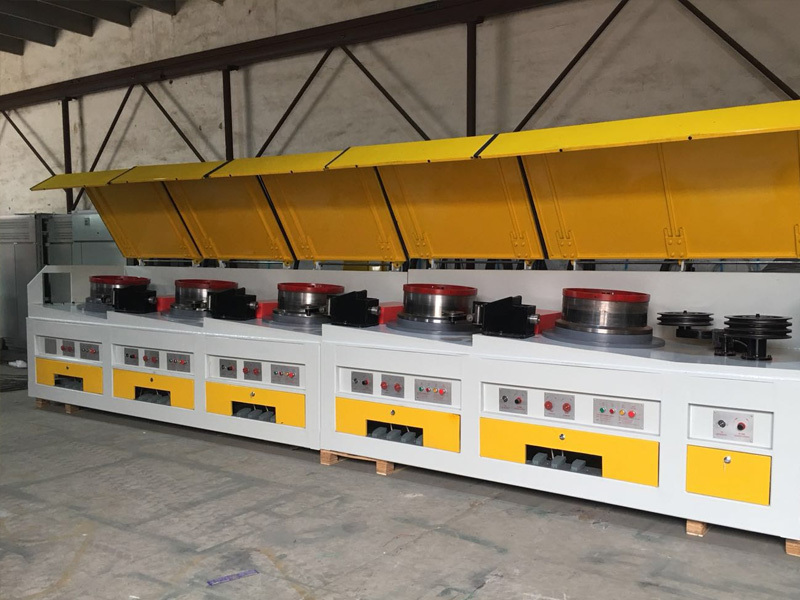
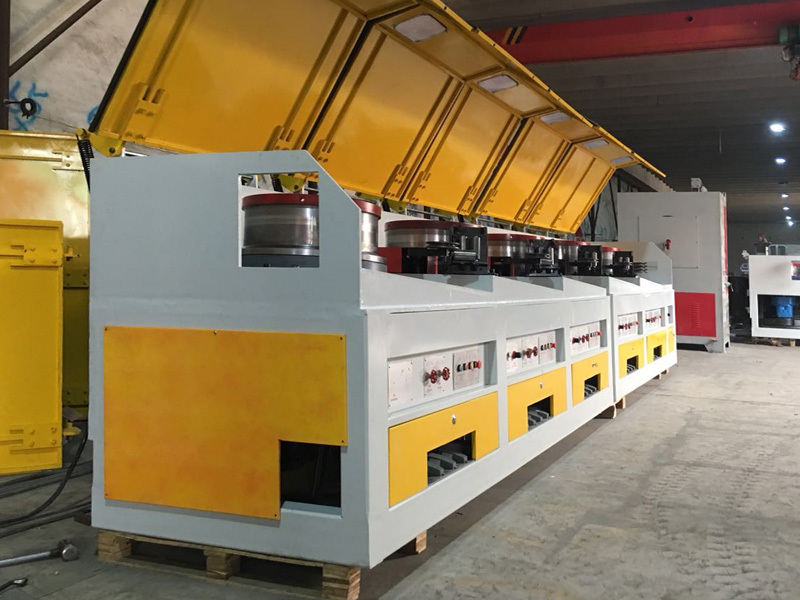
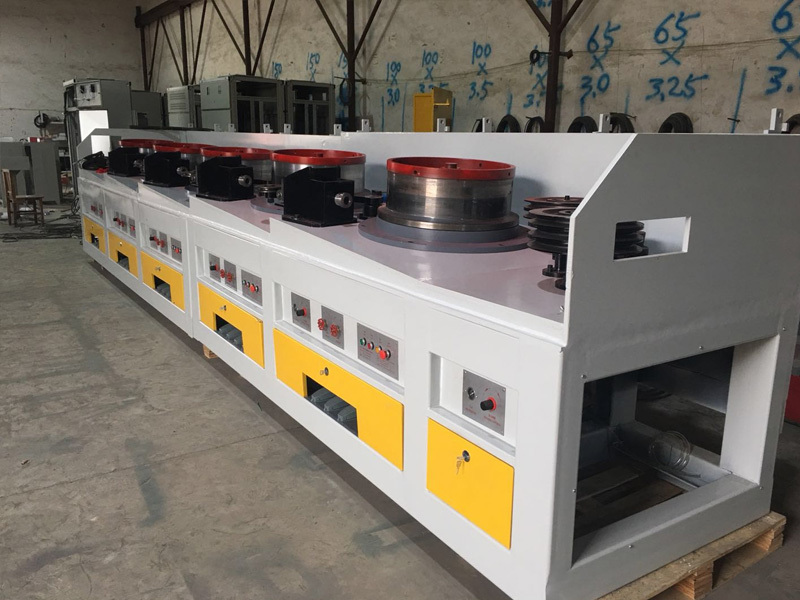
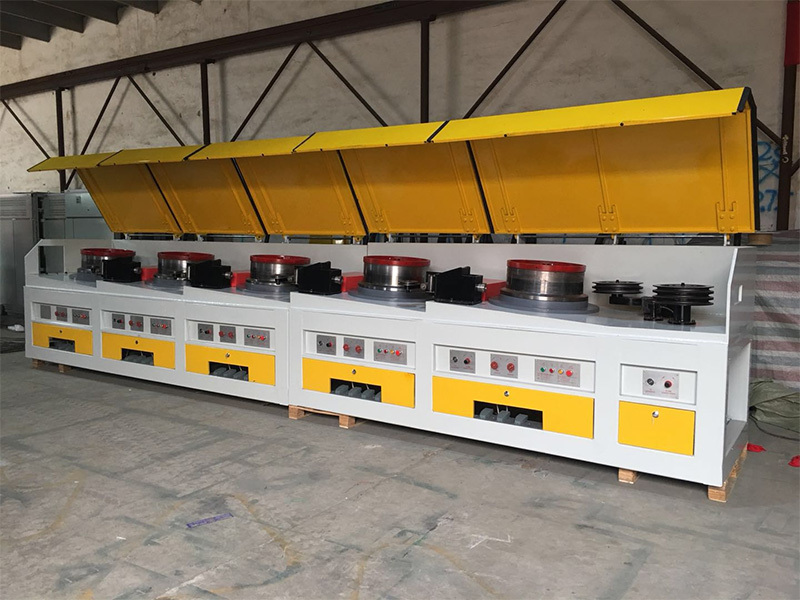
For manufacturers producing steel wire and other metal wires in large quantities, a straight line wire drawing machine provides a continuous solution for multi-pass wire drawing. By arranging multiple drawing blocks in sequence, the machine can complete several drawing stages in one continuous production process.
So, how does this type of wire drawing equipment improve production efficiency? The answer can be seen from several important parts of the drawing process.
What Makes a Straight Line Wire Drawing Machine Efficient?
A straight line wire drawing machine is designed around continuous production. Instead of stopping the wire between different drawing operations, the wire moves through a series of drawing dies and blocks in sequence.
Each drawing block performs a specific drawing pass and works together with the other blocks to gradually reduce the wire diameter. This arrangement allows the drawing process to be completed continuously from the incoming wire to the finished product.
For factories with high production requirements, this continuous working method can reduce unnecessary handling and production interruptions while making better use of the available production time.
Continuous Drawing Reduces Production Interruptions
One of the main advantages of a straight line wire drawing machine is continuous operation.
In a multi-pass drawing process, the wire passes through several dies without requiring repeated manual transfer between individual drawing machines. Once the production line has been properly adjusted, the wire can move continuously through the drawing stages.
This is particularly useful for large-scale wire production. Fewer interruptions mean less time spent on restarting the equipment, adjusting the wire path, or transferring material between different production stages.
For a factory running its equipment for many hours each day, reducing these small interruptions can have a noticeable effect on total production output.
How Multi-Block Drawing Improves Production

The drawing blocks are one of the important components of a straight line wire drawing machine.
During the drawing process, the wire diameter is reduced step by step through multiple drawing dies. Each block provides the pulling force required for its drawing stage, while the complete system maintains the movement of the wire through the production line.
This multi-pass arrangement distributes the total reduction across several drawing stages instead of attempting to complete the entire reduction in a single operation.
The actual number of drawing blocks depends on factors such as the raw wire diameter, finished wire diameter, material properties, required reduction per pass, and production requirements.
A properly designed drawing pass schedule can help the machine maintain stable operation while achieving the required finished wire size.
Stable Wire Tension Helps Maintain Production
Wire tension is another important factor in continuous drawing.
During production, the drawing blocks need to work together at appropriate speeds. If the tension between different drawing stages is not properly controlled, the wire may become unstable or the risk of wire breakage may increase.
Stable tension helps the wire pass smoothly through the drawing dies and reduces unnecessary adjustment during production.
This is especially important when the machine is operating at a relatively high drawing speed. A stable production process allows operators to spend less time dealing with unexpected problems and helps maintain consistent production conditions.
The Role of Cooling and Lubrication
Wire drawing generates heat because the metal wire is continuously deformed while passing through the drawing dies. Friction between the wire and the dies also affects the drawing process.
For continuous wire drawing, an effective cooling and lubrication system is therefore important.
Proper lubrication can reduce friction during drawing, while cooling helps control the temperature of the wire, dies and drawing blocks. These systems are particularly important when the equipment needs to operate continuously for long production periods.
Suitable cooling and lubrication can help:
- Reduce drawing resistance
- Control operating temperature
- Protect drawing dies
- Reduce the possibility of surface defects
- Support continuous machine operation
- Extend the service life of important components
The specific cooling and lubrication method should be selected according to the wire material, machine configuration and production requirements.
How Machine Speed Affects Wire Production
Drawing speed is an important production parameter, but higher speed does not always mean higher overall efficiency.
A wire drawing machine needs to maintain a balance between speed, wire quality and operating stability. If the drawing speed is increased beyond what the dies, cooling system, transmission system or wire material can reasonably support, wire breakage and other production problems may occur.
For this reason, the useful production speed should be considered together with the complete drawing process.
A machine that operates at a stable speed for a long period can provide better actual production results than a machine with a higher theoretical speed but frequent interruptions.
Reducing Downtime in Continuous Wire Drawing
Unplanned downtime directly reduces production output.
For a continuous wire drawing line, downtime may be caused by wire breakage, die problems, transmission problems, abnormal temperature, electrical faults or improper machine adjustment.
Good equipment design, suitable component selection and regular maintenance can help reduce these problems.
Operators should also regularly check drawing dies, lubrication conditions, cooling systems, transmission components and electrical controls. Early detection of abnormal conditions can prevent a small problem from developing into a longer production stoppage.
In actual wire production, stable operation is an important part of production efficiency.
How Automation Supports Wire Drawing Production
Modern wire drawing equipment can use electrical control systems to make production operation more convenient.
Depending on the machine configuration, the control system can monitor and manage important operating conditions such as drawing speed, motor operation, production status and machine alarms.
Automation can reduce unnecessary manual adjustments and help operators identify abnormal conditions more quickly.
For manufacturers running continuous production, a suitable control system can make daily operation easier and improve the consistency of the production process.
Consistent Wire Quality Also Improves Production Efficiency
Production efficiency should not be measured only by the amount of wire produced per hour.
If the finished wire diameter is unstable or the surface quality does not meet requirements, additional inspection, adjustment or reprocessing may be necessary. In some cases, defective material may also result in material loss.
A properly configured multi-pass drawing process helps distribute the total diameter reduction across several drawing stages. With suitable dies, drawing parameters, cooling and lubrication, manufacturers can maintain more stable finished wire dimensions.
This means that stable wire quality and production efficiency are closely related.
Why Straight Line Wire Drawing Machines Are Suitable for Large-Scale Production
For factories producing large quantities of steel wire, the production system needs to balance output, quality and operating stability.
A straight line wire drawing machine has several characteristics that make it suitable for continuous industrial production:
- Continuous drawing: The wire passes through multiple drawing stages without repeated manual transfer.
- Multi-pass processing: Several drawing operations can be completed in one production line.
- Stable operation: The drawing blocks work together to maintain controlled wire movement.
- Integrated cooling and lubrication: These systems support continuous drawing operation.
- Flexible configuration: The number of drawing blocks and machine specifications can be selected according to production requirements.
- Electrical control: The machine can be equipped with a control system for easier operation and monitoring.
These characteristics make straight line wire drawing machines suitable for many applications where continuous wire production and stable output are required.
What Factors Determine the Efficiency of a Wire Drawing Machine?
The actual efficiency of a wire drawing production line is affected by more than one parameter.
Important factors include:
- Raw wire material
- Incoming wire diameter
- Finished wire diameter
- Number of drawing passes
- Drawing speed
- Drawing die condition
- Wire tension
- Cooling and lubrication
- Transmission system
- Take-up system
- Electrical control system
- Machine maintenance
These factors need to work together. Increasing only one parameter without considering the complete production process may not result in higher actual output.
SATLE Straight Line Wire Drawing Machine

SATLE is a Chinese manufacturer of wire drawing machines and related wire processing equipment. We provide straight line wire drawing machines for customers who require continuous multi-pass drawing and stable production.
The machine configuration can be designed according to the customer's actual production requirements, including raw material, inlet wire diameter, finished wire diameter, number of drawing passes, production speed and required output.
Different wire products require different drawing conditions. For this reason, SATLE focuses on matching the machine configuration with the customer's production process instead of using one standard configuration for every application.
Our technical team can provide equipment recommendations based on the customer's wire specifications and production requirements.
For more information, visit the Straight Line Wire Drawing Machine product page.
Improve Production Efficiency with a Properly Designed Drawing Process
Improving wire production efficiency is not simply a matter of increasing machine speed.
A reliable production line needs to coordinate drawing dies, drawing blocks, wire tension, cooling and lubrication, transmission, electrical control and take-up equipment.
A straight line wire drawing machine integrates these processes into a continuous production system. When the machine is correctly configured and maintained, it can help manufacturers increase output, reduce unnecessary downtime, maintain stable wire quality and make better use of production time.
For manufacturers planning to expand production capacity, upgrade existing wire drawing equipment or build a new wire production line, a straight line wire drawing machine can be a practical solution for continuous wire drawing.
Looking for a straight line wire drawing machine for your production line? Send SATLE your raw wire diameter, finished wire diameter, wire material and production requirements. Our technical team can recommend a suitable machine configuration for your application.
Frequently Asked Questions
What is a straight line wire drawing machine?
A straight line wire drawing machine is a continuous wire drawing machine that uses multiple drawing blocks and dies to reduce the diameter of metal wire through several drawing passes. The drawing blocks are arranged in a straight production line, allowing continuous wire drawing.
What materials can be processed by a straight line wire drawing machine?
Depending on the machine configuration, straight line wire drawing machines can be used for suitable metal wire materials such as low carbon steel wire and high carbon steel wire. The machine design should be matched with the material properties and required finished wire size.
How does a straight line wire drawing machine increase production?
The machine improves production efficiency mainly through continuous multi-pass drawing. The wire can pass through several drawing dies and blocks in one production process, reducing manual transfer and unnecessary production interruptions.
What factors affect wire drawing efficiency?
Drawing speed, number of drawing passes, wire material, die condition, lubrication, cooling, wire tension, transmission performance and take-up operation can all affect wire drawing efficiency. These factors need to be properly matched for stable continuous production.
Is a straight line wire drawing machine suitable for high-volume production?
Yes. The continuous working principle and multi-block configuration make straight line wire drawing machines suitable for many high-volume wire production applications. The specific machine configuration should be determined according to the customer's wire specifications and production requirements.
Key words:


☎️Phone
* Please Enter Keywords
The company specializes in the development and manufacture of a complete set of welding wire production lines and a complete set of metal wire drawing machines 📮 info@cnwiremachine.com